A founder story that started with 20 flip-flops
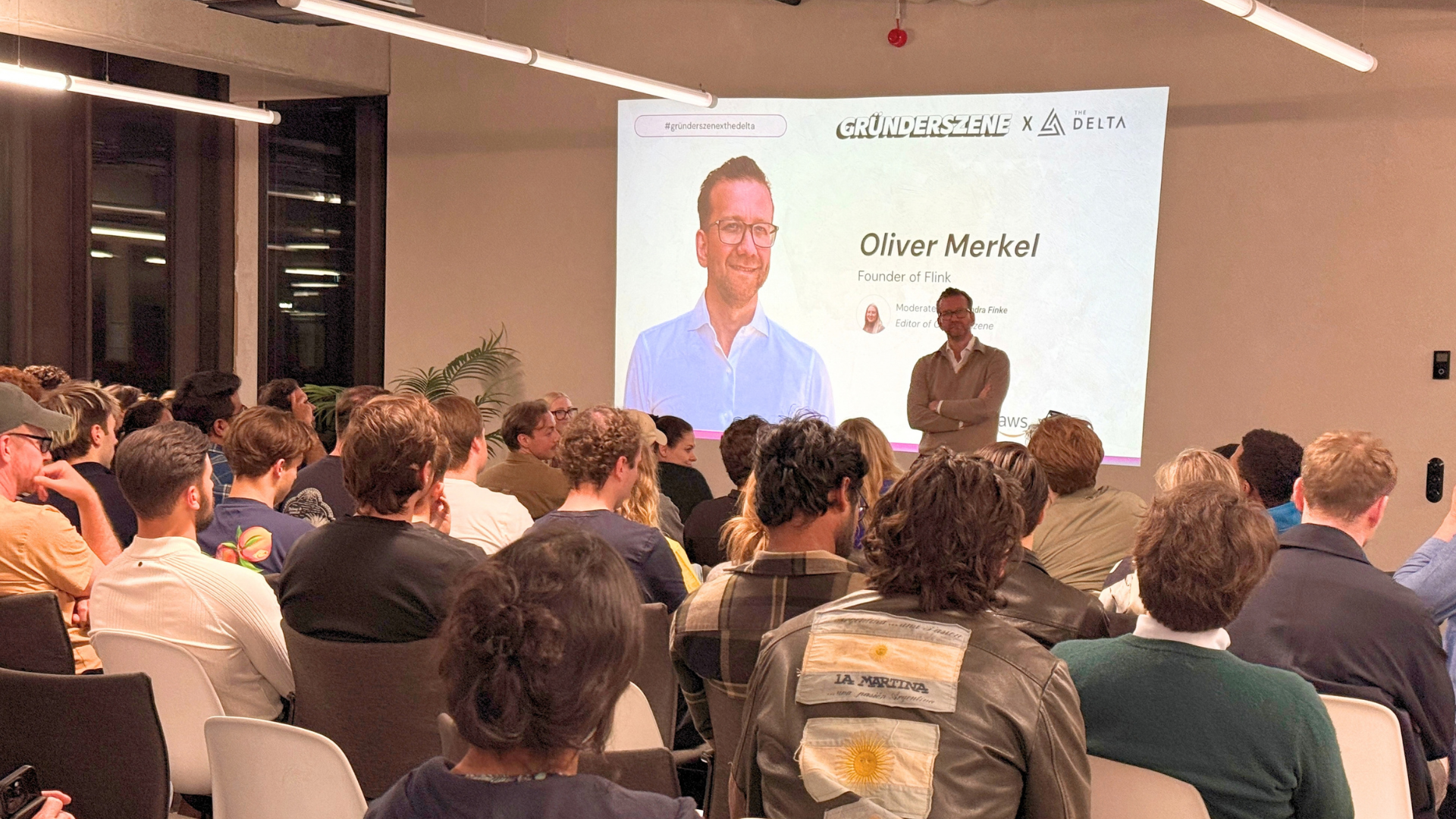
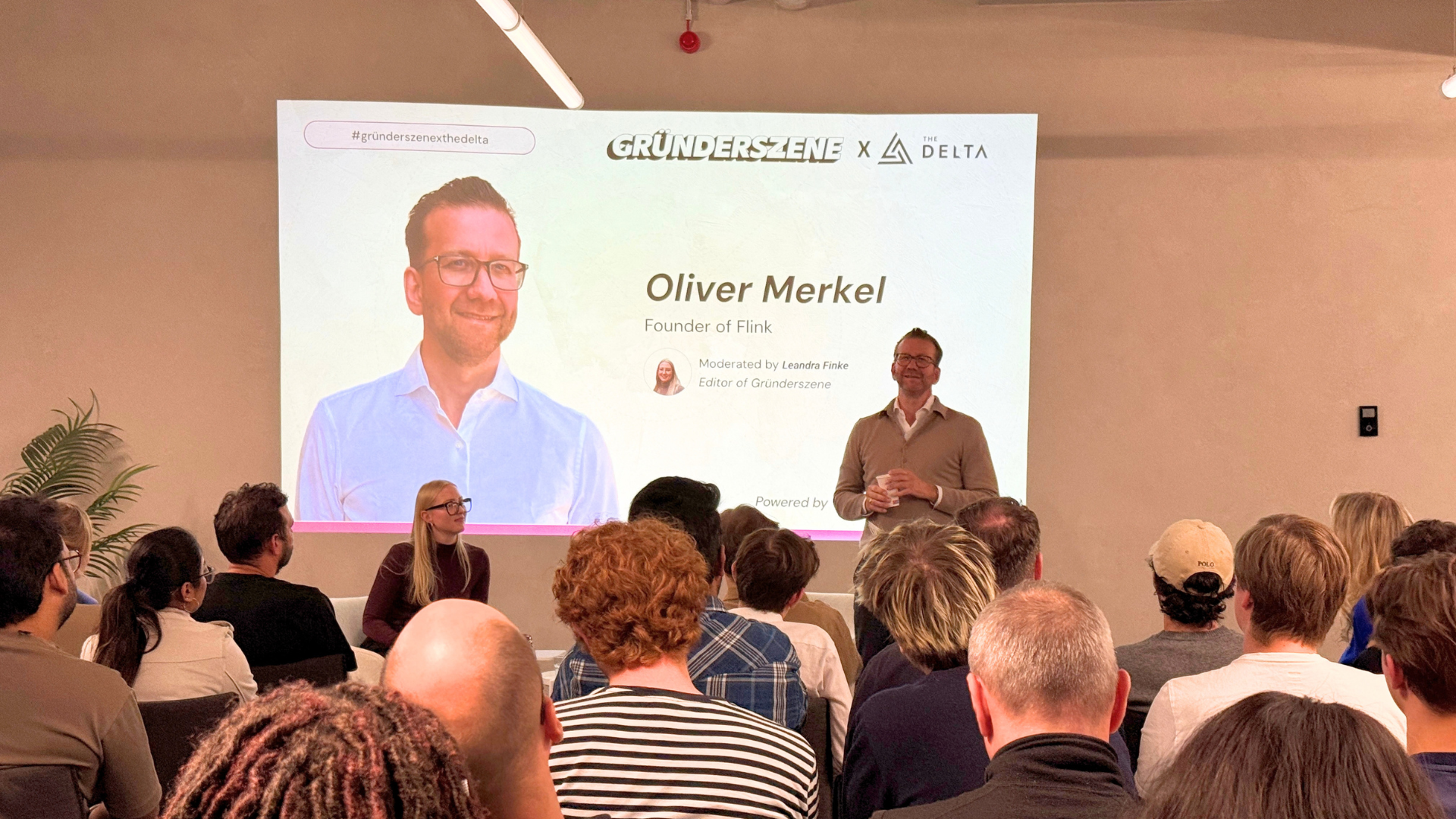
At the first Gründerszene × The Delta Campus event, Zalando’s co-founder and co-CEO Robert Gentz joined our co-founder Julian Teicke for an honest conversation about building, failing, and growing through uncertainty.
Today, Zalando is one of Europe’s most recognised companies, a publicly listed e-commerce giant with over 50 million customers and billions in annual sales. But as Robert reminded the audience, it started in a small apartment with a few friends, 20 daily orders, and a website that almost didn’t work.
Before Zalando, Robert and his co-founder David Schneider had already built and lost their first startup. It was a social network for Latin American students inspired by Facebook and StudiVZ. They launched fast, grew to 70,000 users, and then hit a wall when Facebook expanded into Spanish-speaking markets.
“I thought back then that you could solve any problem with enough confidence,” he said. “That experience showed me that sometimes you can’t and that’s okay.”
The failure forced them back to Europe; broke, humbled, and more realistic about what it takes to build something that lasts.
Starting again, this time with shoes
When Robert and David launched Zalando in 2008, their first product wasn’t fashion but it was flip-flops. They’d tested the idea through a small experiment called Fliptop.de, buying sandals from a local store, uploading them online, and seeing if anyone would buy.
It worked. Twenty orders a day turned into hundreds.
They realised they were onto something simple but powerful: people would buy shoes online even when everyone said they wouldn’t.
Their first investment was just €50,000. That money had to cover inventory, rent, a website, and a few employees. Every order was packed by hand and carried to the post office. It was messy, exhausting, and scrappy but it gave them a kind of momentum that only comes from learning by doing.
“When you start from nothing, every sale means something,” Robert said. “You see the full loop from a customer clicking buy to the product arriving at their door.”
That direct connection to customers, he explained, was one of the most valuable feedback loops they ever had, something large companies often lose as they scale.
Risk, growth, and what you don’t know
By 2012, Zalando had gone from a €5 million startup to a €1.2 billion company in just four years. It was one of the fastest scaling businesses in European history.
Looking back, Robert said that kind of growth only happens when you’re “too naïve to know all the reasons it shouldn’t work.”
“If I knew back then everything I know now, I probably wouldn’t have taken the same risks,” he said. “Sometimes you need that mix of optimism and inexperience to make the impossible happen.”
The financial crisis was still in full swing, and most investors were cautious. But Robert and David doubled down, buying inventory ahead of time based on the belief that their marketing would work. It was an enormous gamble that could have ended their company, but it didn’t.
Still, he’s quick to admit that the learning curve was steep. Going from 50 to 5,000 employees in a few years changed everything from culture to communication. What worked at five people broke at fifty. What worked at fifty broke at five hundred.
Evolving from founder to CEO
As Zalando grew, Robert had to evolve from being a hands-on founder to leading thousands of people. The hardest part, he said, wasn’t delegation but it was self-awareness.
“In the beginning, you’re on the field scoring goals yourself,” he said. “Later, your job is to make sure everyone else can score.”
He learned that leadership at scale is less about control and more about culture. If the founder starts coming late to meetings, everyone else will too. If the founder tolerates mediocrity, it spreads.
“How you behave becomes the culture,” he said. “Not what’s written on the wall.”
At one point, he realised that adding more management layers made the company slower. People stopped talking directly to each other. Problems that used to be solved in hours took weeks.
The solution was to simplify, to remove unnecessary complexity and rebuild trust between teams.
“The bigger you get, the easier it is to lose connection,” he said. “You have to keep fighting for simplicity.”
Learning to think long-term
When asked what he wishes he’d known in the early days, Robert was reflective.
He said the balance between optimism and realism is crucial and founders need to dream big, but also stay grounded enough to question their assumptions. He’s learned to surround himself with people who see things differently and to listen to them early.
He also stressed the importance of explicit leadership principles, values that scale beyond the founder’s personality.
At Zalando, one of those principles is “Fly High, Dive Deep”, the idea that great leaders can move between big-picture strategy and detailed execution seamlessly.
“If you can’t go deep, you’re making decisions without context,” he said. “And that’s when bad calls happen.”
From startup to institution without losing curiosity
Despite leading a company of over 15,000 employees, Robert still sees Zalando as “unfinished.” He’s not interested in becoming an incumbent; he wants to keep the energy of a startup to stay curious, experimental, and uncomfortable.
“As long as you’re curious, you keep growing,” he said. “The moment you stop asking questions, you stop leading.”
That curiosity, he believes, is what will define Europe’s next generation of founders, not just technical brilliance, but a willingness to learn, evolve, and rebuild continuously.
Founder Learnings
- Failure is one of the fastest ways to build judgment.
- Naïveté isn’t a weakness but it can fuel early risk-taking.
- Company culture mirrors the founder’s behavior.
- Growth requires fewer layers, not more complexity.
- Curiosity is what sustains leadership over time.
If you’re ready to begin your founder journey, The Delta Campus is the right place to take your first step so Book your Tour now or contact us.
Written by Alexandra Matthews
Chief Operating Officer