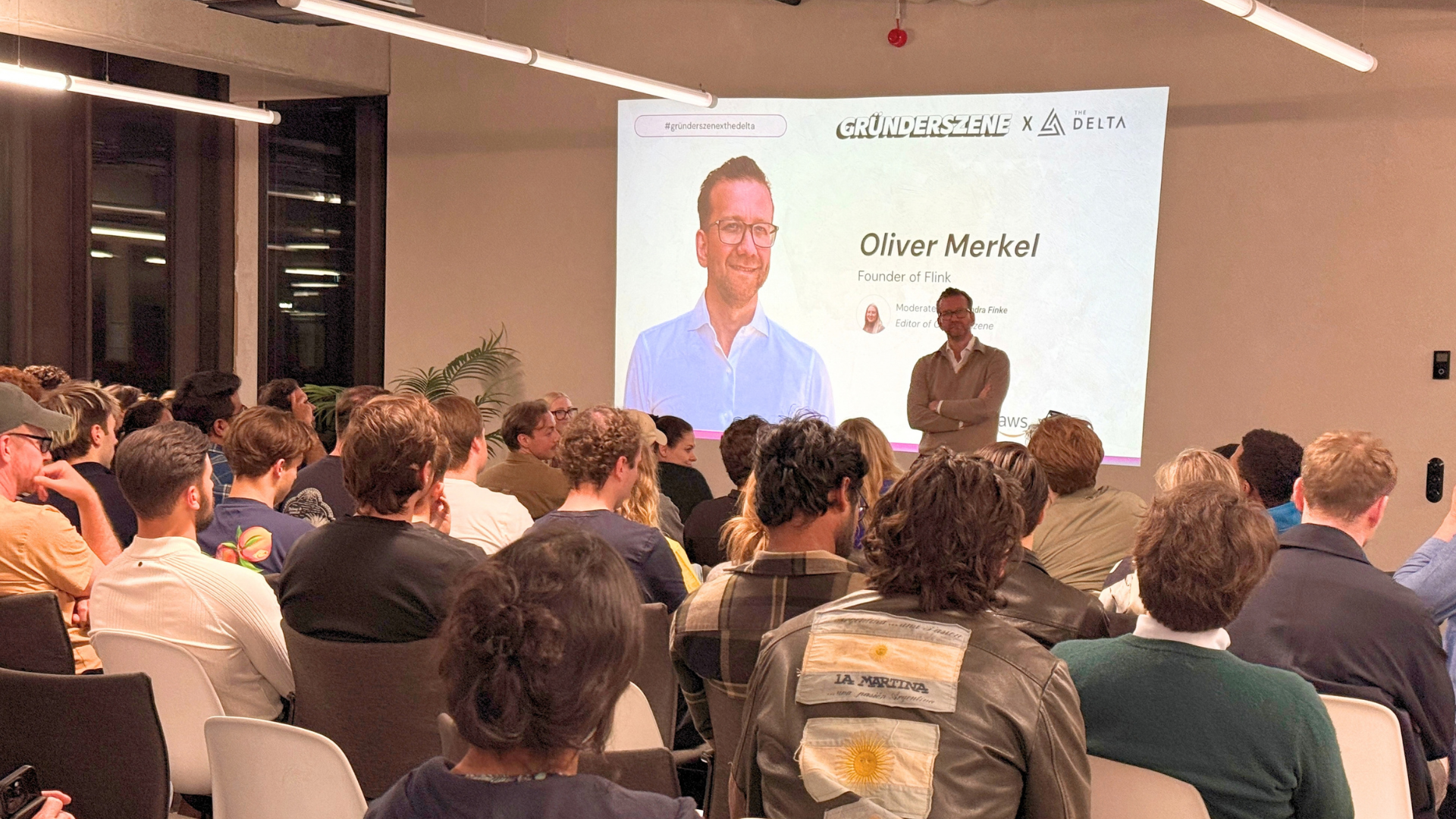
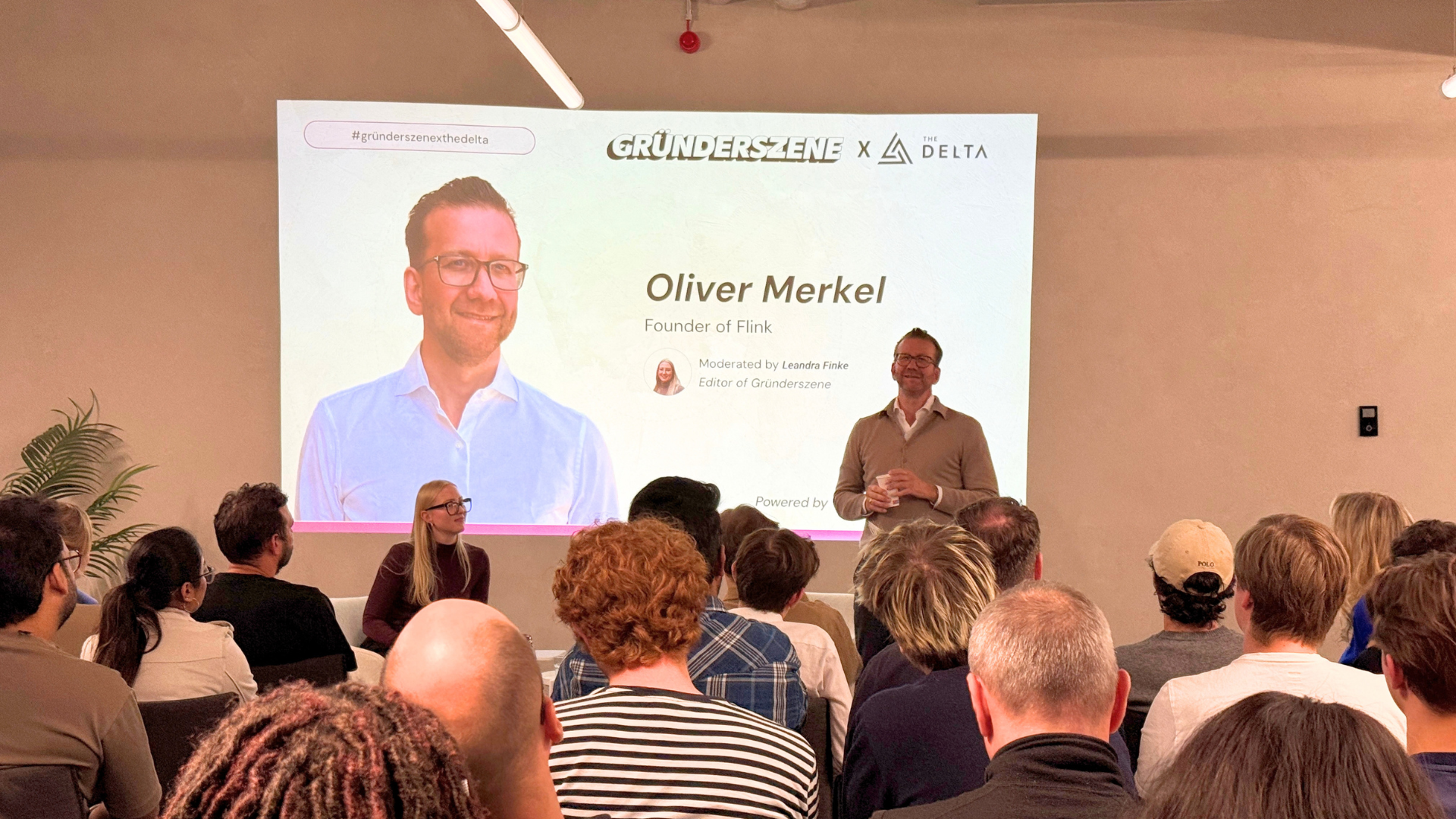
The second Gründerszene × The Delta Campus edition featured a founder story that begins in a warehouse corner full of discarded goods and leads, decades later, to building moonshots for nature.
Lawrence Leuschner, founder of Rebuy and Tier Mobility, joined The Delta Campus for a fireside chat that was equal parts scrappy origin story and honest reflection on what scaling really costs. Before the headlines, before the funding rounds, before the teams, his first business model was simple: save what others throw away.
The first lesson: value hides in what people discard
When Lawrence was eight years old, he noticed something in his father’s warehouse. In one corner sat a pile of hammocks being thrown out because they were no longer considered sellable.
He couldn’t accept it.
He asked if he could take them. He carried them into his room. The next morning, he convinced his mum to drive him to a flea market.
He sold them.
Not because they were perfect, but because he believed someone else would still value them.
That small moment shaped a pattern that would repeat throughout his life: resources are finite, waste is often a failure of imagination, and value depends entirely on perspective.
From flea markets to a real company
Years later, that instinct evolved into his first startup with friends: buying and selling used video games.
They were teenagers with ambition, no real plan, and no idea how venture capital worked. They cold called investors in London with broken English. They were told to send a business plan and then realised they didn’t actually know what a business plan was.
So they wrote one. For a year.
Their first funding round was, by Lawrence’s own admission, a bad deal: €40,000 for 30 percent of the company. But it was enough to move forward.
In 2006, they moved to Berlin and lived and worked in a massive shared flat. It was chaotic, improvised, and intense. At peak, around 25 people worked out of that apartment while five founders lived there.
There was no compliance team. No culture deck. Just momentum and a lot of learning by doing.
The moment Trade a Game became Rebuy
A turning point came when they stopped thinking of themselves as a niche reseller and started thinking bigger. Used goods, Lawrence believed, could be safe, trusted, and mainstream.
They rebranded Trade a Game to Rebuy.
In 2007, they ran a banner on the homepage that read: Save CO₂. Buy a used phone and save 80 grams of CO₂.
It flopped. Conversion dropped sharply.
Nobody even knew what CO₂ was.
Instead of abandoning the idea, they doubled down. They added an entire section to the website explaining climate change and the greenhouse effect. It was a terrible user experience, but it was built on conviction.
It worked. Rebuy attracted its first group of customers who understood not just what the company sold, but why it existed.
Over time, that scrappy beginning turned into a serious business, with millions of products flowing through the system and a meaningful impact on circular consumption in Europe.
Looking back without romanticising it
Lawrence was clear that the journey was not a straight line of smart decisions. He described himself less as a genius and more as someone with stubborn will, a strong work ethic, and a fair amount of luck.
He also pushed back on the idea that the right move is always to quit early.
Sometimes, when you believe deeply in what you’re building and have put everything into it, staying is the strategy.
His story holds both truths at once: fail fast when something isn’t working, but commit fully when it truly is.
From circular commerce to scaling Tier Mobility
After more than a decade building Rebuy, Lawrence went on to help build Tier Mobility, one of Europe’s most recognisable micromobility companies.
Tier Mobility scaled at extraordinary speed, expanding into hundreds of cities, hiring thousands of people, and operating in an environment defined by intense competition and constant pressure. The company became a symbol of European hypergrowth, showing both what fast execution can unlock and what it demands in return.
Over time, Lawrence experienced firsthand that scale alone is not the finish line. Growth creates complexity, emotional cost, and responsibility that founders rarely anticipate when momentum is high.
From mobility to protecting the Amazon
After stepping back from the day-to-day operations at Tier Mobility, Lawrence took a sabbatical that changed his direction once again.
Spending extended time in nature, travelling through South America, he witnessed the accelerating destruction of ecosystems up close. Wildfires, deforestation, and collapsing biodiversity were no longer abstract concepts or statistics. They were immediate and visible.
That experience led to his most ambitious decision yet.
Rather than founding another venture-backed growth company, Lawrence decided to build something fundamentally different.
Building Capacity: moonshots for nature
That decision became Capacity, Lawrence’s latest venture.
Capacity is a non-profit venture builder focused on solving systemic biodiversity challenges using technology, entrepreneurial execution, and long-term thinking. Its first mission is also its most ambitious: helping protect the Amazon rainforest from illegal deforestation.
Working directly with Indigenous communities, Capacity uses satellite data, real-time monitoring, and on-the-ground coordination to detect illegal logging early and support enforcement before irreversible damage occurs.
The ambition is planetary in scale.
By 2030, Capacity aims to help protect hundreds of millions of hectares of rainforest, operating at a speed and precision conservation efforts have rarely had access to before.
For Lawrence, this is not a departure from entrepreneurship. It is its logical continuation.
The same instincts that once made him rescue discarded hammocks now drive him to protect ecosystems others still treat as expendable.
A founder journey that comes full circle
Seen from the outside, the path looks diverse: flea markets, e-commerce, mobility, biodiversity.
From the inside, it follows one clear thread.
Seeing value where others see waste
Acting early, before consensus forms
Staying when something truly matters
What began as a child selling broken hammocks has become a lifelong commitment to protecting what cannot be replaced.
Founder Learnings
- Your first business instinct often reveals your long-term founder pattern
- Early financing shapes your company for years; negotiate with clear eyes
- Scrappy execution creates momentum, but only if learning keeps pace
- Conviction matters, but it must survive reality checks and iteration
- Sometimes persistence is the strategy, not the mistake
If you’re building in Berlin and want to do it surrounded by other founders, The Delta Campus is where those conversations become part of daily life. Book a tour and come see it in person.
Written by Alexandra Matthews
Chief Operating Officer