How ambitious companies are using hackathons to pressure-test problems, ship prototypes, and break internal inertia and how to run one that produces real outcomes.
Most corporate innovation moves at the speed of the calendar. A problem gets identified in Q1, scoped in Q2, resourced in Q3, and quietly deprioritised by Q4. Meanwhile the actual question can this be built, and is it worth building? - goes unanswered for a year.
A hackathon answers it on the weekend.
The new generation of hackathons isn't about toy demos. It's a deliberately compressed R&D cycle: take a real, operationally meaningful problem, put a curated group of builders on it for 48 hours, and walk away with working prototypes, a map of what's possible, and a clear read on where to invest next. When hallo theo framed their Applied AI Hackathon around "making service industries irresistible," the brief was explicitly the unglamorous, high-value, overlooked stuff; property management and operationally complex sectors, not another consumer app. The output was deployment-ready solutions to problems companies actually have.
Here's why it works as an innovation strategy.
Constraints force clarity. A year of runway invites endless scoping. Forty-eight hours forces teams to find the smallest version of a solution that actually works. That constraint is a feature; it produces honest answers fast and kills bad ideas cheaply, long before they consume a roadmap.
You get parallel bets, not a single roadmap. Instead of one team marching down one path, a hackathon runs ten teams at the same problem from ten angles. Some approaches will surprise you. Some will fail instructively. You learn more about the solution space in two days than a single team learns in two quarters and the winning approaches are battle-tested by demo time.
Fresh builders see what insiders can't. Internal teams carry the assumptions of the org. Bring in external builders or mix them with your own and the "obvious" constraints get challenged. Some of the most valuable hackathon outputs aren't the prototypes; they're the moments a stranger asks "why do you even do it that way?"
It puts the newest tools in your hands, immediately. Hackathons are where teams actually try the frontier. With partners like Anthropic, Stripe and ElevenLabs integrated directly into the challenges, builders ship with the latest AI and infrastructure and your company gets a live demonstration of what those tools can do for your specific problem, without a six-month evaluation.
It breaks inertia. Sometimes the real value is cultural. A high-energy, well-produced hackathon resets what your teams believe is possible on a timeline. People who watched a working prototype get built over a weekend find it much harder to argue something will take a year.
As with hiring, the outcome depends entirely on execution. A hackathon with vague challenges, no mentor support and a flat atmosphere produces noise. A hackathon with sharp, real problems, the right partners, strong builders and a room that signals this matters produces prototypes you can actually act on and demos worth showing your leadership.
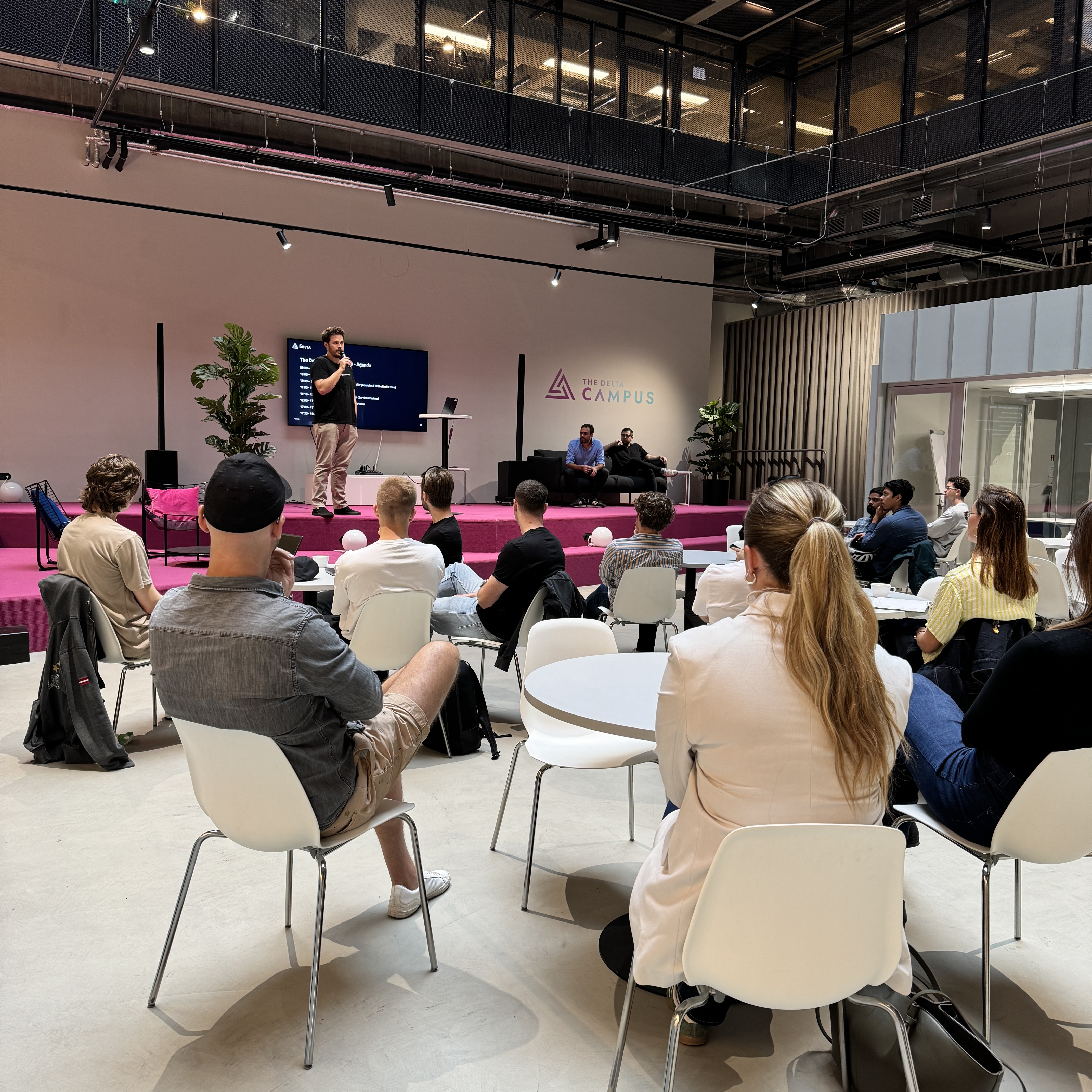
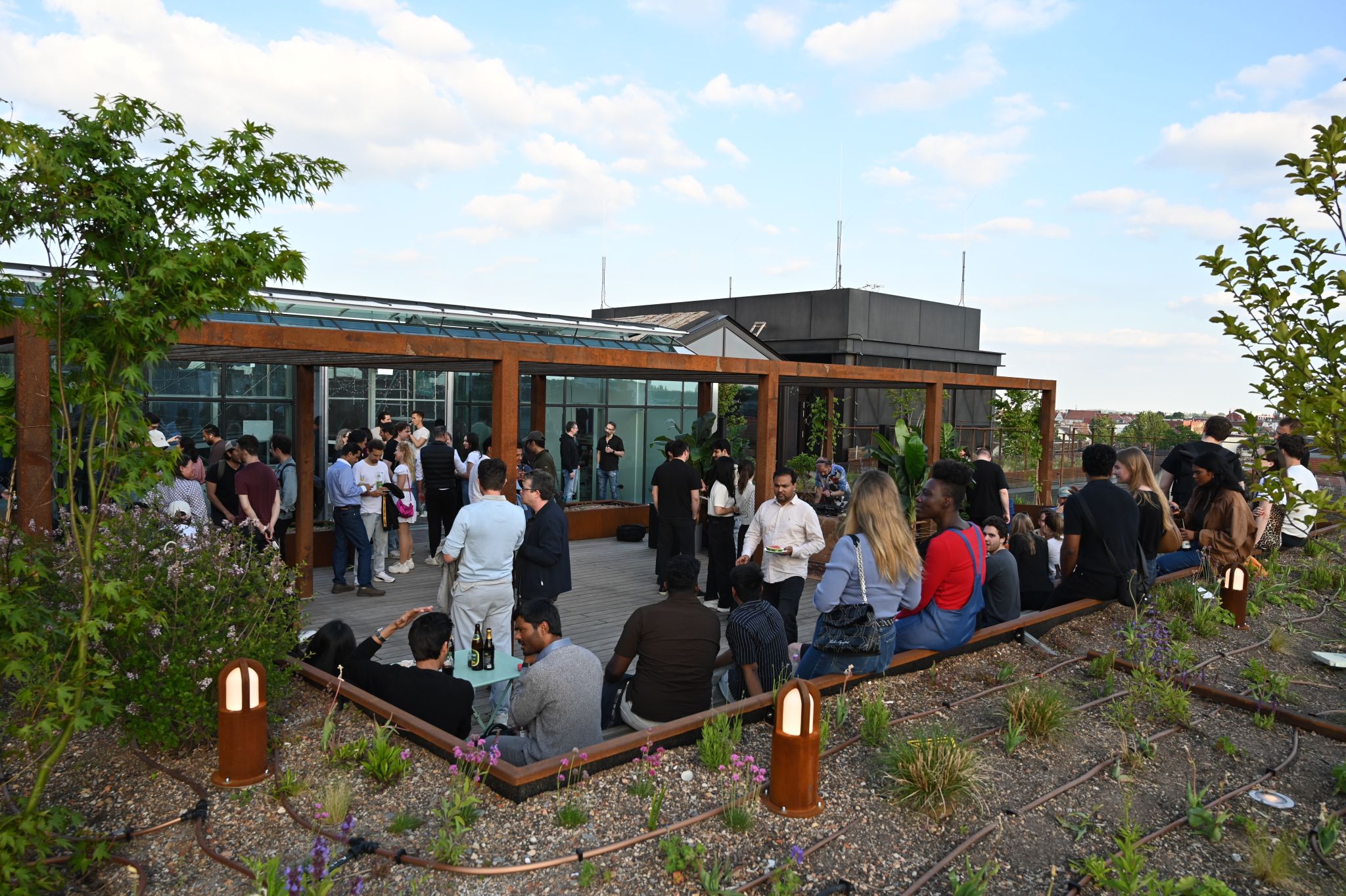
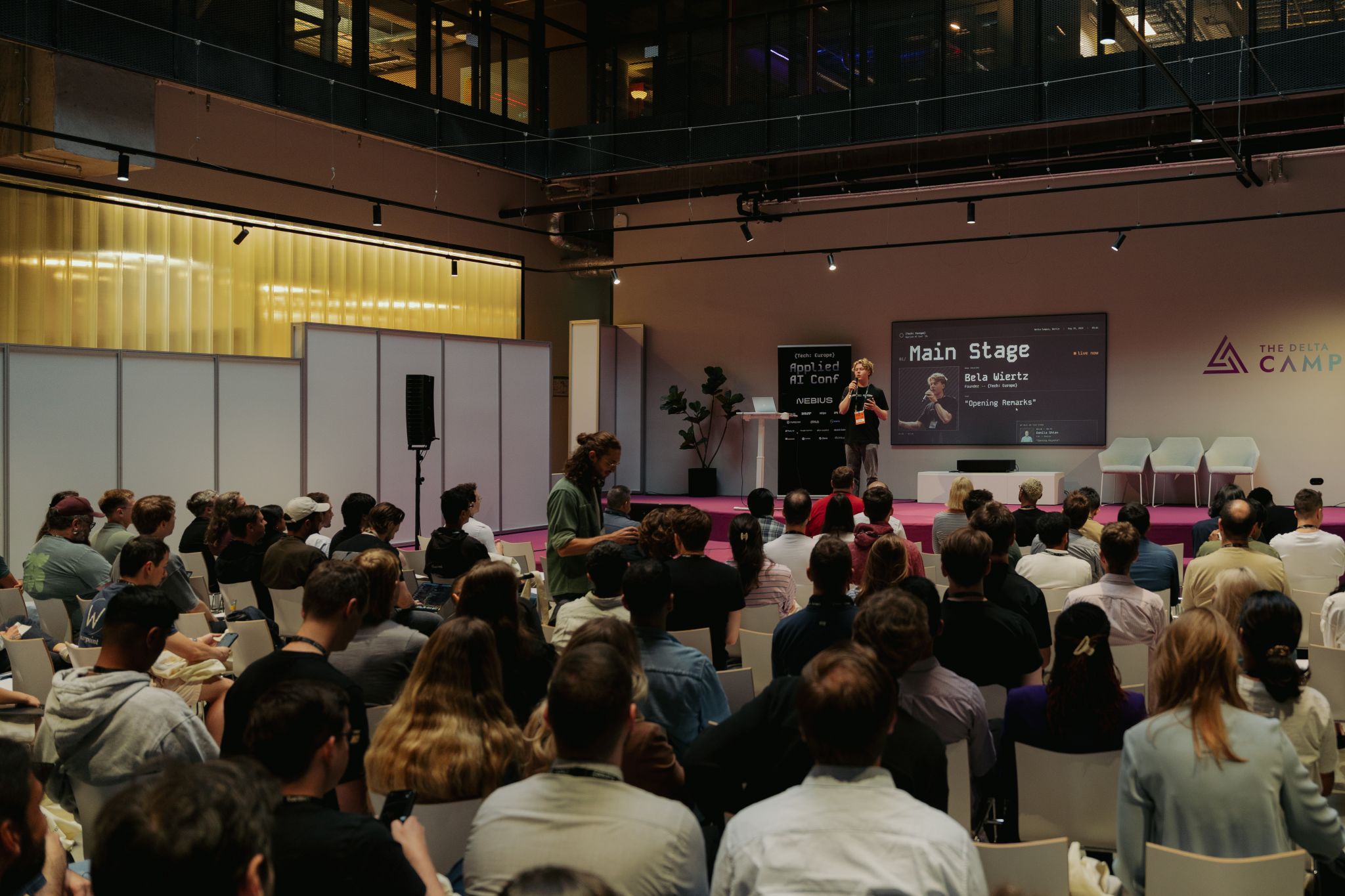
That's what we build at The Delta. Real challenges, curated builders, top-tier tech partners, mentor flow, a demo stage, and a production team that runs the entire weekend on a campus designed for exactly this. Companies and communities like Tech Europe bring their hackathons here because the format is serious and the output is real.
If you've got a problem that's been stuck in the roadmap for a year, give it 48 hours and the right room instead.
Ready to turn a hard problem into working prototypes? Host your hackathon at The Delta
Written by Elisabeth Sabeditsch
Partner