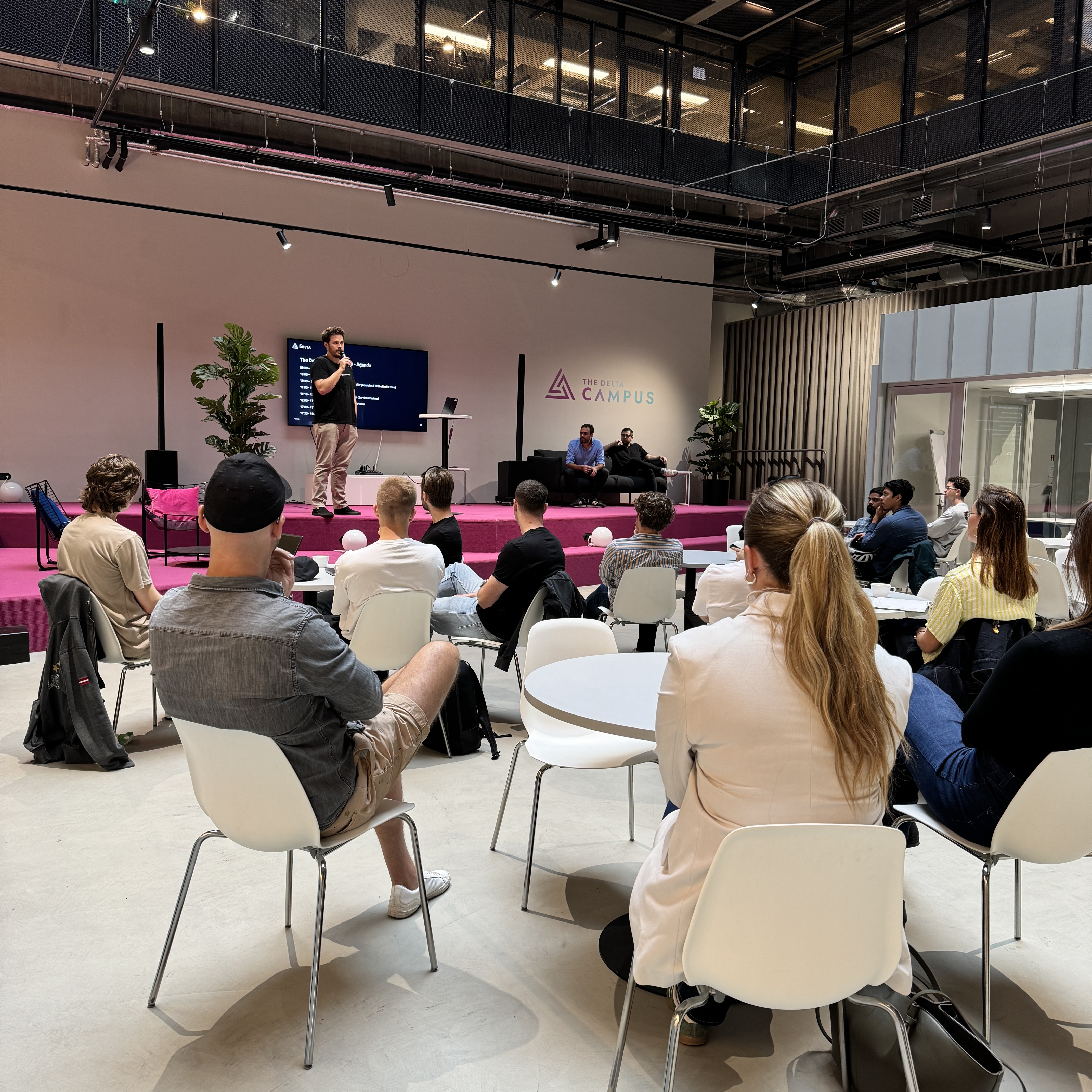
At the seventh edition of Gründerszene x The Delta, Dr. Patrick Andrae did not just talk about how HomeToGo was built. He talked about what happened after: the pandemic that closed the fundraising window, the counterintuitive decision to list anyway, and what it actually feels like to run a public company when the stock price does not reflect the work underneath it.
As Co-founder and CEO of one of Europe's most ambitious marketplace businesses, Patrick has spent the years since the 2021 IPO navigating something most founders never face. This is a story about what going public really looks like from the inside.
The fundraise that hit a wall
HomeToGo's plan at the start of 2020 was to raise a new round early in the year. Patrick and the team were in London. The meetings were going well. They joked that it might be the last flight they took for a while.
It was.
Within weeks, travel had stopped entirely. No investor wanted to back a travel company mid-pandemic. The logic was simple: even if it is a good bet, if it goes wrong, everyone will tell you how stupid you were. HomeToGo's existing investors stepped in with bridge financing on fair terms. They understood the company had not made an operational mistake. It had run into a once-in-a-generation external event.
That bought time to think clearly about what came next. The options were a private round or going public. Patrick's read was counterintuitive but precise. If we get even half of one good summer, he said, we will not need to spend on advertising because people will come on their own. After the first wave, everyone wanted to travel again. Vacation rentals were perfectly positioned: private, isolated, no shared hotel lobbies. HomeToGo could have sold three times the inventory it had. The timing, paradoxically, was right.
Going public: what changed and what didn't
HomeToGo listed on the Frankfurt Stock Exchange in 2021. The route was via a SPAC, which Patrick described as speed dating on steroids as multiple funds approached them simultaneously.
What changed immediately was visibility. Quarterly results. Guidance. Analyst calls. A stock price updating every day.
One fear before listing was that he would become emotionally attached to the stock price in a way that would cloud judgment. That fear was not unfounded. The company went public at a valuation that subsequent market conditions significantly reduced. At listing, revenue was around 90 million euros. It now projects over 400 million. The execution has been strong. The stock has not yet reflected that.
He was direct about the frustration. Everything they told the market they would do, they did. Profitability in 2023: delivered. B2B at 20 percent of revenue by 2023: delivered. The gap between what the company has built and what the market currently values it at is not something he pretends is fine. But he has also found that being public has forced disciplines that made the company better.
The discipline public companies get for free
When you are private, telling the company's story is important but rarely urgent. There is always something more pressing. As a public company, that story is due on a fixed schedule whether you are ready or not.
That pressure forced Patrick to think more carefully about narrative, about what the company was actually doing and why, and to communicate it in a way that could survive external scrutiny. That clarity does not stay outside the building. It comes back in. The strategy becomes more legible internally because someone had to make it legible externally.
He also noted something less obvious about public versus private valuation. A private company may look like it is worth more, but layers of liquidation preferences and different share classes mean a 10 percent stake might be worth nothing in a bad outcome. On the public market there is one share class. The price is the price. Transparency cuts both ways.
On company evolution and knowing when to change
One of the sharpest moments of the evening came when Patrick was asked about HomeToGo's transformation from meta search to marketplace to B2B software platform. From outside, people see a pivot. From inside, he said, it looked like the plan was unfolding.
He used Amazon as the reference point. AWS, the infrastructure business that drives most of Amazon's profit, was once something people inside resisted on the grounds that they were a retail company. The companies that become genuinely important are almost always the ones willing to become something different from what they started as.
His point for founders: resistance to change inside a company is normal. If you propose a meaningful evolution, some of your best people will push back. That is not a signal to stop. It is a signal that you are proposing something real.
What he looks for as an angel investor
Patrick has invested in companies as an angel and the criteria have evolved. He looks primarily at people now, not ideas. An idea is an idea. What matters is whether the person in front of him has the conviction and capability to execute on it.
He also acknowledged one category where he is probably a worse investor than average: travel. He knows too much about what has not worked. That knowledge makes him too cautious in a space where trusting the founder and getting out of the way might serve him better. Sometimes, he said, knowing less is the right investment posture.
Founder Learnings
- Going public is not the end of the founder game. It is a new set of rules with different pressures and different advantages.
- Public markets force narrative discipline that most private companies let slide. That discipline is worth building even if you never plan to list.
- The gap between what a company executes and what the market values it at can be wide and can persist. The only answer is to keep executing.
- Company evolution is not failure. The most important question a founder can ask is not what we are building but what we can become.
- Knowing too much about an industry can be a liability as an investor. Sometimes the right move is to trust the founder and step back.
If you want to build something that lasts and do it alongside people who are thinking the same way, The Delta Campus is where that starts, so book your tour now or contact us.
Written by Alexandra Matthews
Chief Operating Officer