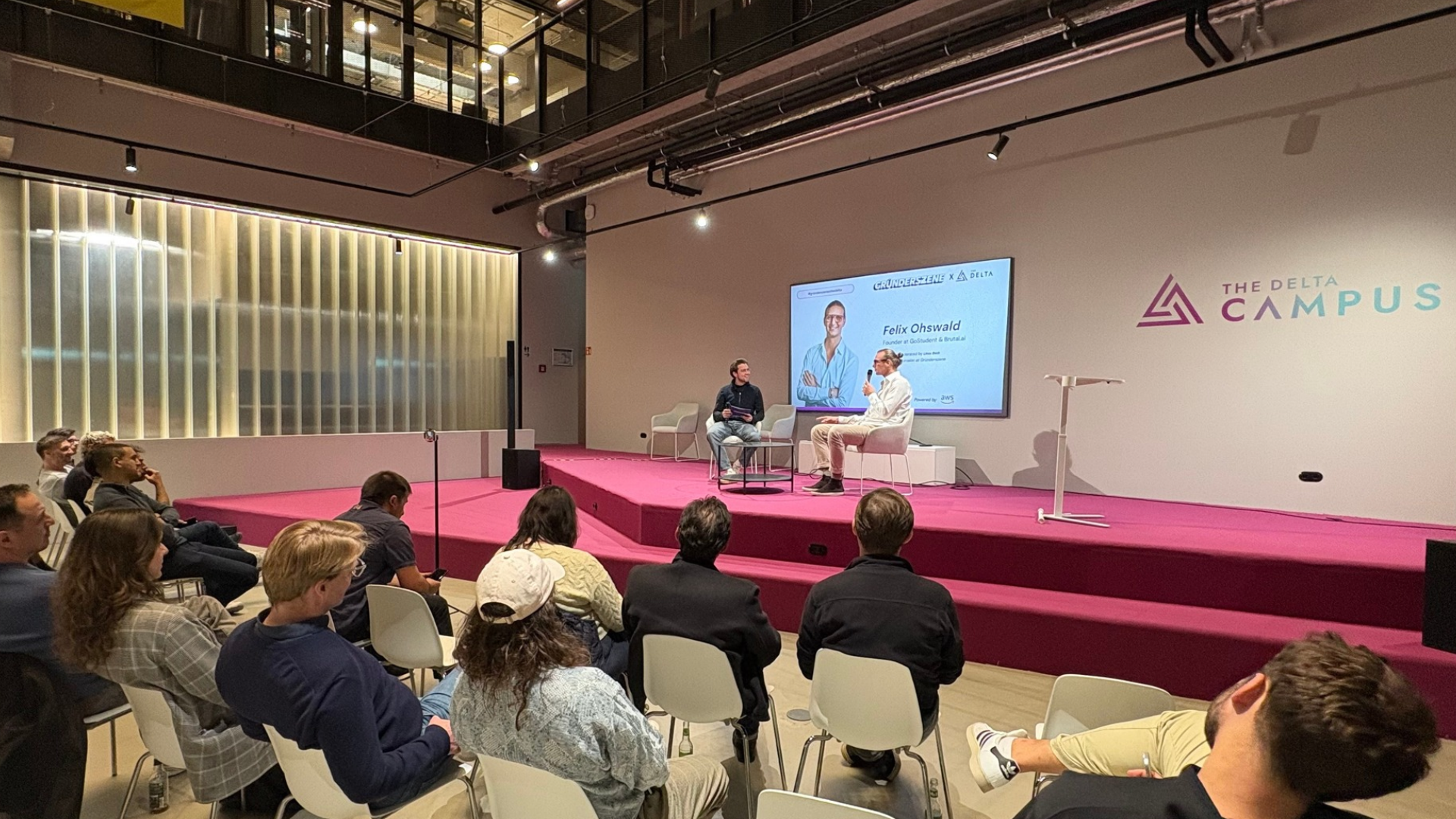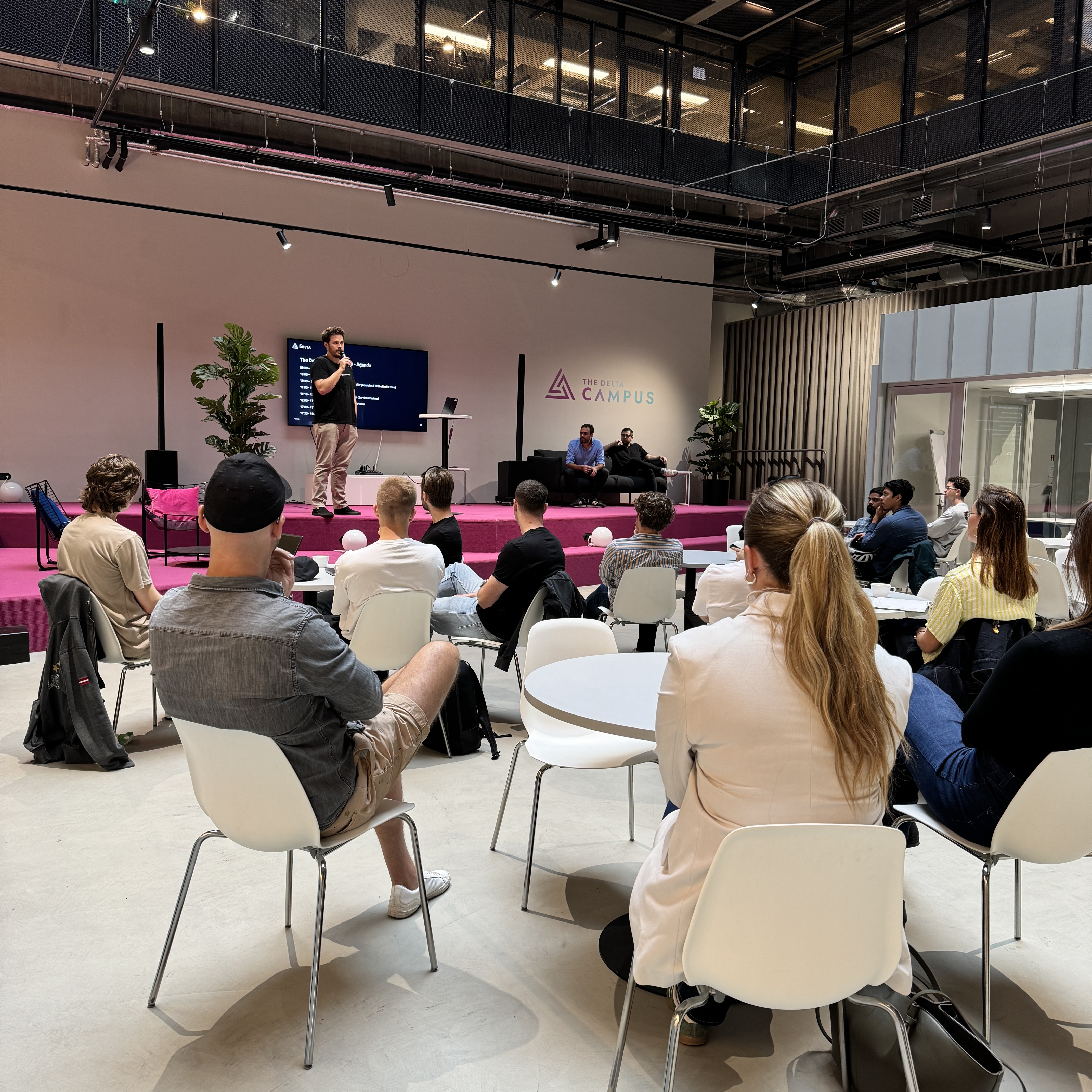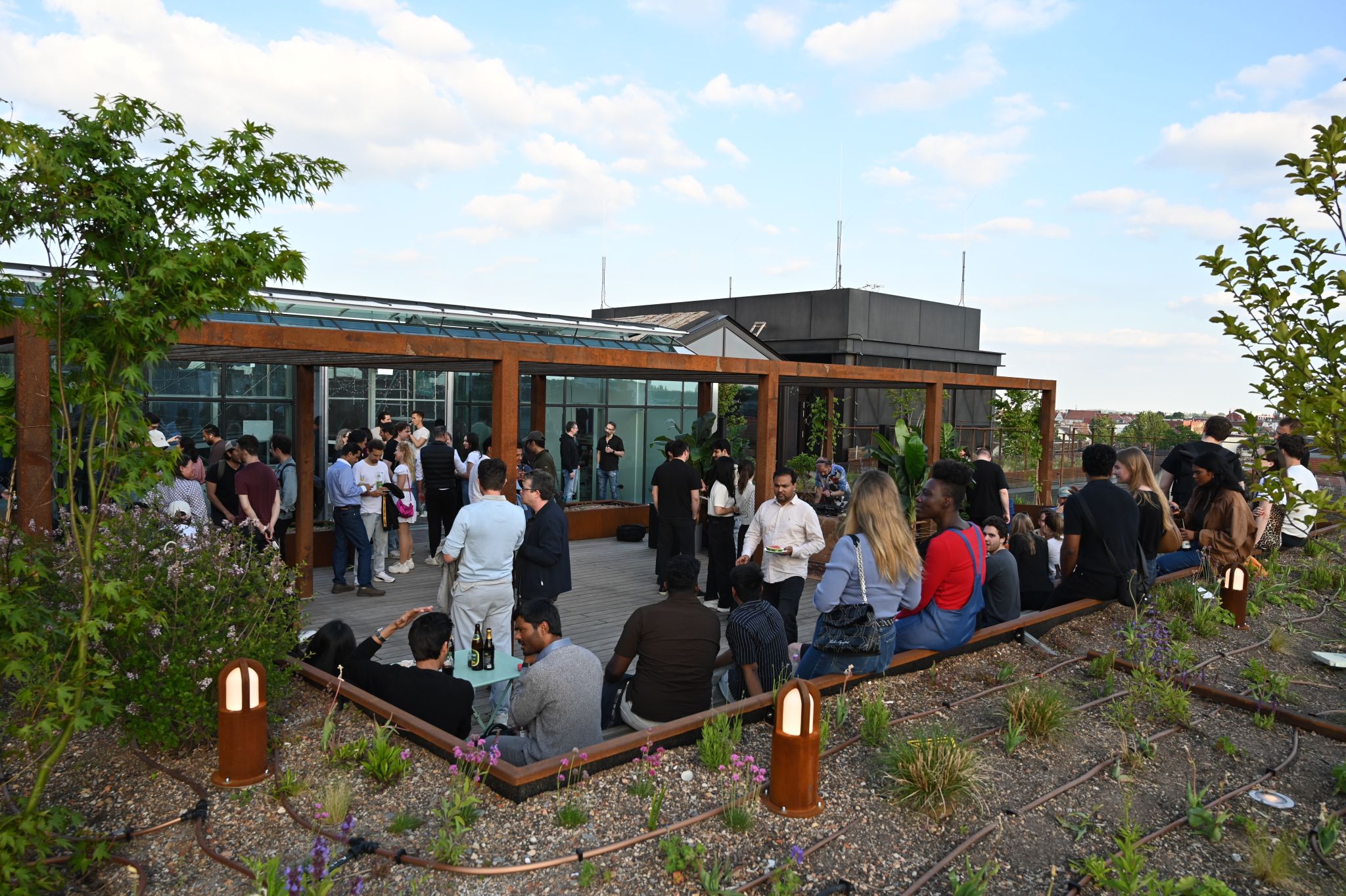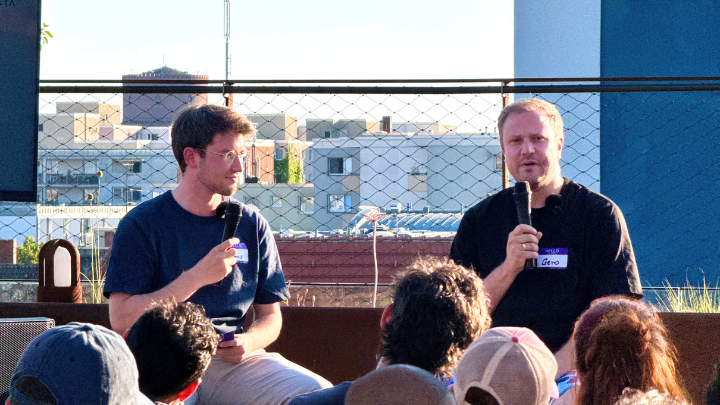

At the 8th edition of Gründerszene × The Delta, Dr. Gero Decker did not just talk about selling Signavio to SAP for 957 million euros. He talked about everything he chose to build afterwards, when nobody would have blamed him for stopping.
As Co-founder of SAP Signavio and one of Germany's most successful enterprise software founders, Gero has spent the years since the 2021 exit doing something harder than founding a company. He is trying to prove that what he built can outgrow him, outgrow its business case, and stand the test of time inside one of the world's largest software companies.
This is a story about what comes after the exit, and why the most driven founders never really cash out.
The high score that came after the money
When SAP acquired Signavio, the obvious script was clear: integrate, hand over, buy the island. Gero rejected it for a reason he stated plainly on stage: he loves high scores. He wouldn't have sold below 957 million because rounded up, it makes a billion, and the next high score was already waiting: make Signavio the best acquisition SAP has ever done.
The first measure was the business case. Within 18 months, Signavio was at roughly double the revenue the acquisition case had projected. But inside SAP, he learned, there are two numbers that really matter. Below 400 million in revenue, a product is optional, the kind of thing that gets shut down over a coffee table conversation. At two billion plus, you get a seat at the table and can no longer be ignored. Signavio entered SAP at 55 million. Today it is closing in on that second threshold.
Disrupt yourself before someone else does
The philosophy behind that growth predates the exit. When competitors positioned Signavio as "the old world," Gero's team made a radical assumption: whatever we do today will be irrelevant in five years, so let us be the ones who disrupt us.
They institutionalised it. Ten to twenty percent of capacity is always invested in the things expected to matter in five to seven years, the things that would otherwise break the company. The result: 80% of Signavio's revenue today comes from products that did not exist five years ago, and growth never collapsed the way it does at companies still doing the same thing a decade in.
His leadership operating system is equally compact. From the only leadership seminar he ever attended, he kept three letters: TCM. Trust, because the moment it cracks, everything slows down. Clarity, because chaos is fine as long as the direction is shared. Momentum, because it compounds, but only if you never stop pushing the flywheel.
The art book nobody saw coming
Then there is the project that has nothing to do with process software. Over the past few years, in long and provocative discussions with Aleph Alpha founder Jonas Andrulis about the end of creativity and originality, Gero developed a deep fascination with what AI does to art.
He did what he always does: started with a provocative thesis. He asked an art professor what he tells his students now that AI is replacing everything they do. The professor's answer was to sit him down for seven private sessions of three hours each on art history. The two are now writing a book together, built on interviews with artists, curators, and AI leaders.
The art world, Gero points out, has survived the printing press and photography. The question is not whether AI is another wave, but what world we actually want to create, because unlike a natural disaster, this one is being built by us.
The stage as an office desk
Gero started as a self-described theoretical computer science nerd. Today he is on stage roughly four times a week, and he treats communication as an engineering discipline. He studies old Steve Jobs keynotes for the pauses. He carries a notebook everywhere and has collected hundreds of stories from the street, from his kids, from customer meetings, waiting for the moment a story fits a point perfectly.
His rule for every talk and every conversation: fewer tadas, more ahas. A tada wastes everyone's time. An aha connects two things in someone's head that were unconnected before. Every presentation he builds starts with the same question: what are the three ahas the audience should leave with?
It is the same challenge that drew him to sales in the first place: walking into a room of skeptics and leaving it with a spark in everyone's eye.
What drives the next chapter
Asked about power as a tool for founders, Gero pushed back on the premise entirely. Power matters in a zero-sum world, where the game is distributed in your favour. He believes in growth, and growth doesn't need power. It needs excitement, vision, dreams, and momentum.
That is the through-line of everything he is building now: a product line fighting for its seat at the table inside SAP, a book on AI and human creativity, and a habit of raising the ambition level every single morning. Celebrate every milestone, he told the audience, then treat it as the new baseline.
Founder Learnings
- The exit is not the finish line. Proving that what you built has substance, and can thrive without you at the centre, is a harder and more meaningful goal than the sale itself.
- Assume your current business will be irrelevant in five years, and invest 10 to 20% of your capacity in whatever replaces it. Be the one who disrupts you.
- Trust, clarity, momentum. Teams don't need perfect order; they need a shared direction and a flywheel someone keeps pushing.
- Communication can be engineered. Collect stories, study the greats, and aim for three ahas in every conversation.
- Power is overrated in business. Growth comes from excitement, vision, and momentum, not from winning zero-sum games.
If you want to build something that lasts and do it alongside people who are thinking the same way, The Delta Campus is where that starts, so book your tour now or contact us.