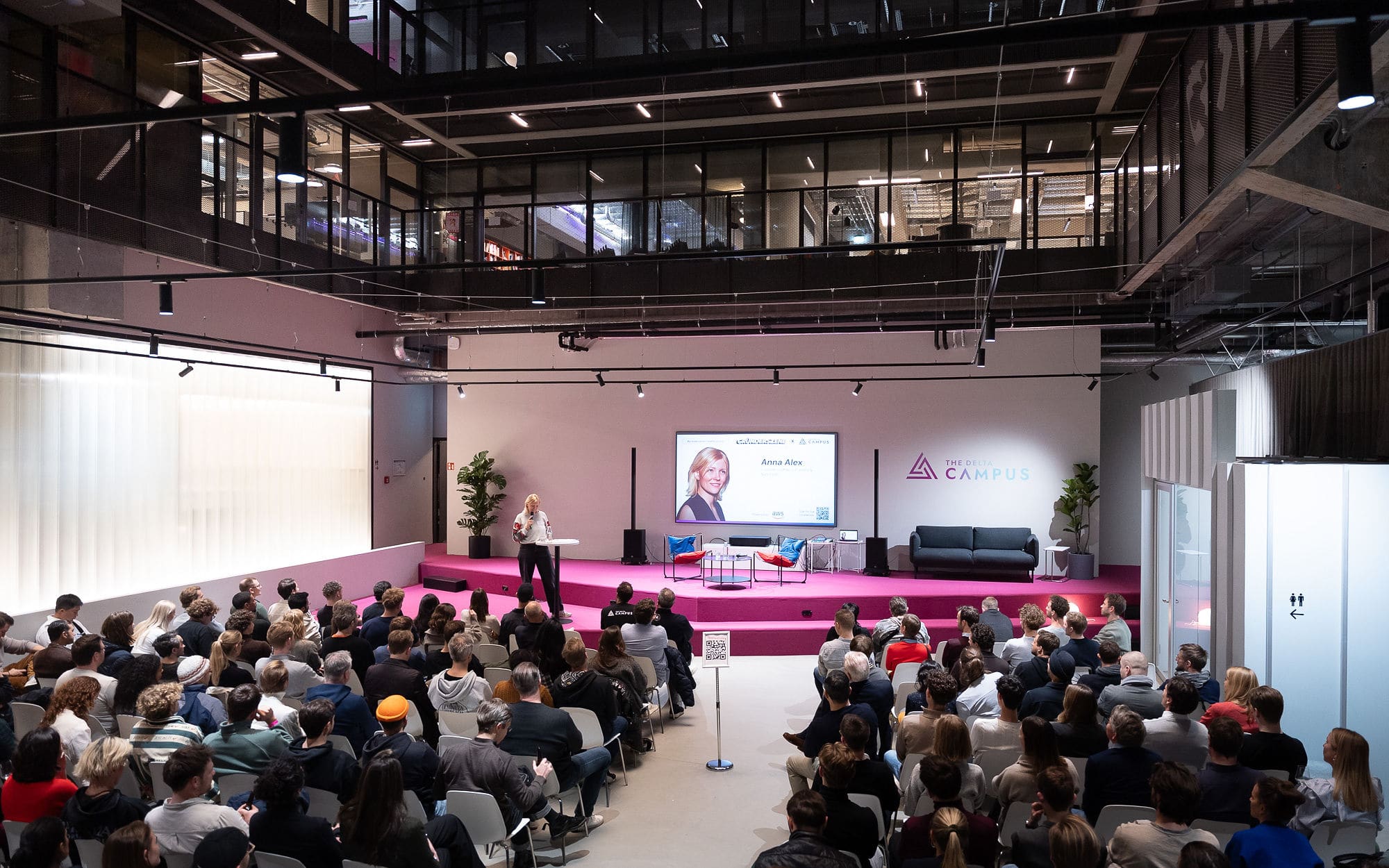

- A startup community is a network of founders, mentors, investors and supporters who share knowledge, contacts and experience.
- Exchange saves time and money: you learn from others' mistakes and find co-founders, talent, customers and investors faster.
- The best connections happen where founders meet regularly: campuses and coworking spaces, meetups, founder dinners and conferences.
- Online, platforms like LinkedIn, Slack and Discord groups, Luma, Indie Hackers and YC Co-Founder Matching complement in-person exchange.
- The golden rule of every community: give before you get.
In this article
- What is a startup community?
- Why startup communities matter
- Why you should always approach other founders
- Where to meet other founders
- Platforms for founder exchange
- What makes a great startup community
- Startup communities in Berlin
- Major startup communities in Germany
- International startup communities and conferences
- How to get the most out of a startup community
- Our experts
- FAQ
What is a startup community?
A startup community is a network of people who build companies or help others do so: founders, early employees, mentors, business angels, investors, universities and service providers. What connects them isn't a shared employer but a shared goal – helping new companies start and grow.
Communities come in many shapes: a physical place like a campus, founder center or coworking space, an event series, an online group on Slack or Discord, or a membership association. The strongest communities combine several of these layers.
In his book Startup Communities (2012), US investor and founder Brad Feld described what makes founder ecosystems work: they are led by founders, built for the long term, open to everyone and driven by regular interaction. His guiding principle is still the most important rule of any community:
Why startup communities matter
Most problems you face as a founder have been solved by someone before you. That's the value of a community: it makes experience shareable. Instead of making every mistake yourself, you can tap into the knowledge of people who are one step ahead.
1. Share knowledge instead of repeating mistakes
How do I structure my first pitch deck? Which tax advisor understands startups? How do I negotiate a term sheet? The answers rarely sit in books – but almost always in another founder's head. A short conversation can save weeks of research and costly mistakes.
2. Access to capital and investors
Investors receive unsolicited pitch decks every day. A warm intro from a founder they know and respect carries far more weight. Being active in a community makes those intros easier – and tells you early which investors fit your business model.
3. Co-founders, talent and first customers
Many founding teams don't meet through job ads but through shared projects, events and referrals. The same goes for first hires and often first customers: other startups are frequently the first to try a new product.
4. Founding is lonely – community helps
High responsibility, uncertainty and setbacks are part of the journey. They're hard to talk about with friends outside the scene. Other founders know what a failed round or a lost key account feels like. That peer exchange is often as valuable as any tactical advice.
5. Pace, ambition and accountability
Spending time with other ambitious teams raises your own bar. Others' progress is motivating, and telling people about your plans makes you more likely to follow through.
What founders underestimate most is that it works both ways. The people who get the most out of a community are the ones who show up, share what they know and help before they ask. It compounds: the intro you make today often comes back to you months later, from somewhere you didn't expect.
 Louis BuysCEO & Founder, The Delta
Why you should always approach other founders
Many founders wait to be approached – or hold back because they want to protect their idea or feel they have nothing to show yet. Both are mistakes. Great communities thrive on people actively reaching out.
- Ideas are rarely the risk. Execution is. Talking openly about your plans gets you feedback, contacts and sometimes the decisive hint.
- Everyone has something to give. Even early on, you have knowledge, contacts or an honest opinion that helps others.
- Relationships need lead time. You might need that investor or co-founder in a year – you should meet them today.
- Founders like helping founders. Almost every successful founder benefited from others and is happy to give back – if you ask specifically.
- You can engineer serendipity. Many key contacts happen in passing – at the coffee machine, over dinner, after a talk. The more often you're there, the luckier you get.
In practice: introduce yourself to the speaker after a talk. Send a short, personal message after an event. Ask specific questions (“How did you find your first tax advisor?”) instead of vague ones (“Can I pick your brain?”). And offer help yourself.
One example is Marc Benioff, the founder of Salesforce. I approached him at a dinner. He didn't only give me great advice but also invested in me and supported me on my journey.
What I took from it: one right conversation at the right moment can save you a year. That's why I'd always reach out, even when it feels awkward. The worst case is no reply.
 Julian TeickeCo-founder & Chairman, The Delta
Where to meet other founders
Online contacts are convenient, but trust is usually built offline. These places and formats work best:
Campuses, founder centers and coworking spaces
Format: Daily, on siteStrength: ContinuityBest for: Every stage
Working next to other founders every day naturally sparks conversations. Quick questions in the kitchen turn into friendships, partnerships and sometimes companies. A campus with its own event program amplifies the effect.
Meetups and founder dinners
Format: Small evening eventsStrength: Personal conversationsBest for: Focused networking
Small formats with 10 to 40 people are often more valuable than big stages. Dinners and small circles lead to deeper conversations than standing receptions.
Workshops, masterclasses and office hours
Format: Learning formatsStrength: Shared topicBest for: Expert exchange
Learning alongside others on the same topic – fundraising, go-to-market, AI – gives you an instant conversation starter. Office hours with mentors also connect you with experienced founders.
Conferences and startup festivals
Format: Large, one or more daysStrength: ReachBest for: Investors, partners
Big events bring many investors, corporates and media together. They pay off with preparation: book meetings in advance, use side events and follow up deliberately.
Universities and founder programs
Format: Programs, cohortsStrength: Same stageBest for: Students, spin-offs
University entrepreneurship centers, accelerator cohorts and fellowship programs bring together teams at the same stage. Many founders stay connected to their cohort for years.
Hackathons and pitch nights
Format: Competition, evening to weekendStrength: CollaborationBest for: Finding co-founders
Spending a weekend building something together tells you more about a potential co-founder than ten coffee meetings.
But the connections that really stick often happen in the evening on the rooftop, when the laptops are closed and nobody is pitching. That's when people talk about what's actually hard. A campus should be designed so all three happen naturally, and you move from ‘I've seen you around’ to ‘let's grab a drink’ without forcing it.
Louis BuysCEO & Founder, The DeltaPlatforms for founder exchange
Online platforms don't replace meeting in person, but they make it easier: you find events, stay in touch and get quick answers to specific questions.
LinkedIn
Type: Professional networkGood for: Visibility, staying in touchCost: Free / Premium
The most important platform for keeping in touch after events and building visibility by sharing your founder journey. Many investors and founders are easy to reach here.
Luma and Meetup
Type: Event platformsGood for: Finding local eventsCost: Mostly free
Many communities publish their events on Luma (lu.ma) and Meetup – from founder breakfasts to pitch nights. Follow a city community and you'll rarely miss an event.
Slack, Discord and WhatsApp communities
Type: Chat groupsGood for: Quick questions, nichesCost: Mostly free
Many communities run closed chat groups, often by topic (SaaS, AI, climate) or role (founders, female founders, operators). This is where you get fast, honest answers.
Indie Hackers, Product Hunt and Reddit
Type: Global online communitiesGood for: Feedback, launchesCost: Free
Indie Hackers is great for bootstrapped founders, Product Hunt for product launches, and subreddits like r/startups for open discussion.
YC Startup School and Co-Founder Matching
Type: Learning and matchingGood for: Finding co-foundersCost: Free
Y Combinator offers free learning content through Startup School and a Co-Founder Matching platform where founders worldwide find each other by skills and interests.
What makes a great startup community
Coworking spaces, founder centers and startup hubs now exist in every major city. But a desk and an event calendar don't make a community. Whether a place becomes a network depends on a few factors:
- The right people: founders at similar stages, plus experienced operators, mentors and investors.
- Consistency: weekly formats build more trust than one-off big events.
- Informal spaces: kitchen, terrace, bar – many real conversations happen after the official program.
- A culture of giving: members share contacts and knowledge without expecting something right away.
- Someone who connects: community managers or founders who actively introduce people.
To find out what really makes the difference in practice, we asked people who have built startup communities themselves:
For me it comes down to three things. The right people: founders and operators who are building seriously and are willing to share. Intention: someone is actively connecting people, programming events and making introductions instead of hoping it happens. And generosity as the norm: people share their numbers, their mistakes and their networks.
Having built wefox and co-founded several other companies, I know how much that culture is worth. When you're surrounded by people a few steps ahead of you, ambition becomes normal.
Julian TeickeCo-founder & Chairman, The DeltaCuration: we're deliberate about who's on campus, so the mix of founders, operators, investors and partners makes every conversation worth having.
Formats: masterclasses with operators who've actually done it, informal networking evenings, weekly member introductions through our community platform, and themed circles where members working on the same things meet regularly.
Spaces: from the coworking floors to the Atrium and the rooftop, the building is designed to get people out of their offices and into each other's paths.
The goal is simple: every founder here should meet the people who move their company forward.
Louis BuysCEO & Founder, The DeltaStartup communities in Berlin
Berlin is one of Europe's most active startup cities, so there's a wide range of communities – from large networks to small, topic-focused circles. A selection:
Founders Hub Berlin
Community partner
Founders Hub Berlin is a community for founders, freelancers and entrepreneurs in Berlin – with more than 1,000 members, according to the community itself. Its program includes co-working events, pitch nights, mentoring and networking. The Delta is a partner of Founders Hub Berlin.
The Delta campus community
Type: Campus communityFocus: Founders, studio ventures, operatorsLocation: Berlin-Neukölln
On our campus in Neukölln, members from coworking, private offices and the venture studio come together at office hours, masterclasses, founder dinners and open events. Note: The Delta is the publisher of this article.
Startup Grind Berlin
Type: Local chapterFocus: Fireside chats with foundersLocation: Varies
The Berlin chapter of the global Startup Grind community regularly hosts founders and investors for fireside chats.
Factory Berlin
Type: Campus and membershipFocus: Tech, creative industriesLocation: Mitte / Kreuzberg
Factory Berlin combines workspace with a member community and its own event program.
University founder networks
Type: Entrepreneurship centersFocus: Students, researchersLocation: TU, FU, HU, HTW and more
Berlin's universities offer advice, fellowships and alumni networks – a good entry point for spin-offs.
Major startup communities in Germany
German Startups Association (Startup-Verband)
Type: National associationFocus: Advocacy, networkLocation: Nationwide
The association represents startups in politics and connects founders through regional groups, events and studies like the German Startup Monitor.
UnternehmerTUM
Type: Entrepreneurship centerFocus: Tech, deep techLocation: Munich / Garching
The Center for Innovation and Business Creation at TU Munich is one of Europe's largest entrepreneurship centers, connecting founders, industry and science.
Bits & Pretzels
Type: Founders festivalFocus: Networking, inspirationLocation: Munich
The annual founders festival in Munich is known for its networking evening around Oktoberfest.
TechQuartier
Type: Innovation hubFocus: Fintech, techLocation: Frankfurt
TechQuartier is the meeting point of Frankfurt's startup scene, with programs, events and community – especially strong in fintech.
International startup communities and conferences
Y Combinator community
Type: Accelerator networkFocus: GlobalAccess: Startup School is open
Beyond the accelerator, Startup School and Co-Founder Matching are open to everyone – a good entry point into the global founder community.
Entrepreneurs' Organization (EO)
Type: Peer networkFocus: Established entrepreneursAccess: Revenue threshold
EO brings entrepreneurs together in small, confidential peer groups. Membership requires a minimum revenue – relevant for founders in the growth stage.
Slush, Web Summit and VivaTech
Type: ConferencesFocus: Investors, corporatesLocation: Helsinki, Lisbon, Paris
Europe's big tech conferences bring together tens of thousands of founders, investors and companies. The best conversations often happen at side events.
How to get the most out of a startup community
- Pick two or three communities and show up regularly – instead of everywhere once.
- Go with a goal: who do you want to meet, which question do you want answered?
- Give first: share contacts, experience and feedback without expecting anything back.
- Follow up within 48 hours – with a personal message and a concrete next step.
- Become visible: give a short talk, host a dinner or share your learnings.
- Stay involved when things go well: a community helps most when you know it before you need it.
Go to events every week for the first few months, and pick the ones where you'll meet builders, not just spectators. Work from a place where founders actually spend their days, so you're not starting every connection from zero. Be specific when you ask for help, and offer something back, even if it's just feedback or an intro.
And don't only look for investors. Other founders at your stage are the ones who'll get you through the hard months. The ecosystem is smaller than it looks, so treat every connection as long-term.
Julian TeickeCo-founder & Chairman, The DeltaOur experts
The tips in this article come from founders who have built companies and communities themselves.
Louis Buys
CEO & Founder, The Delta
Louis Buys is CEO and founder of The Delta, the founder campus in Berlin-Neukölln with its own venture studio.
Julian Teicke
Co-founder & Chairman, The Delta
Julian Teicke is co-founder and chairman of The Delta. Before that, he founded the insurtech wefox.