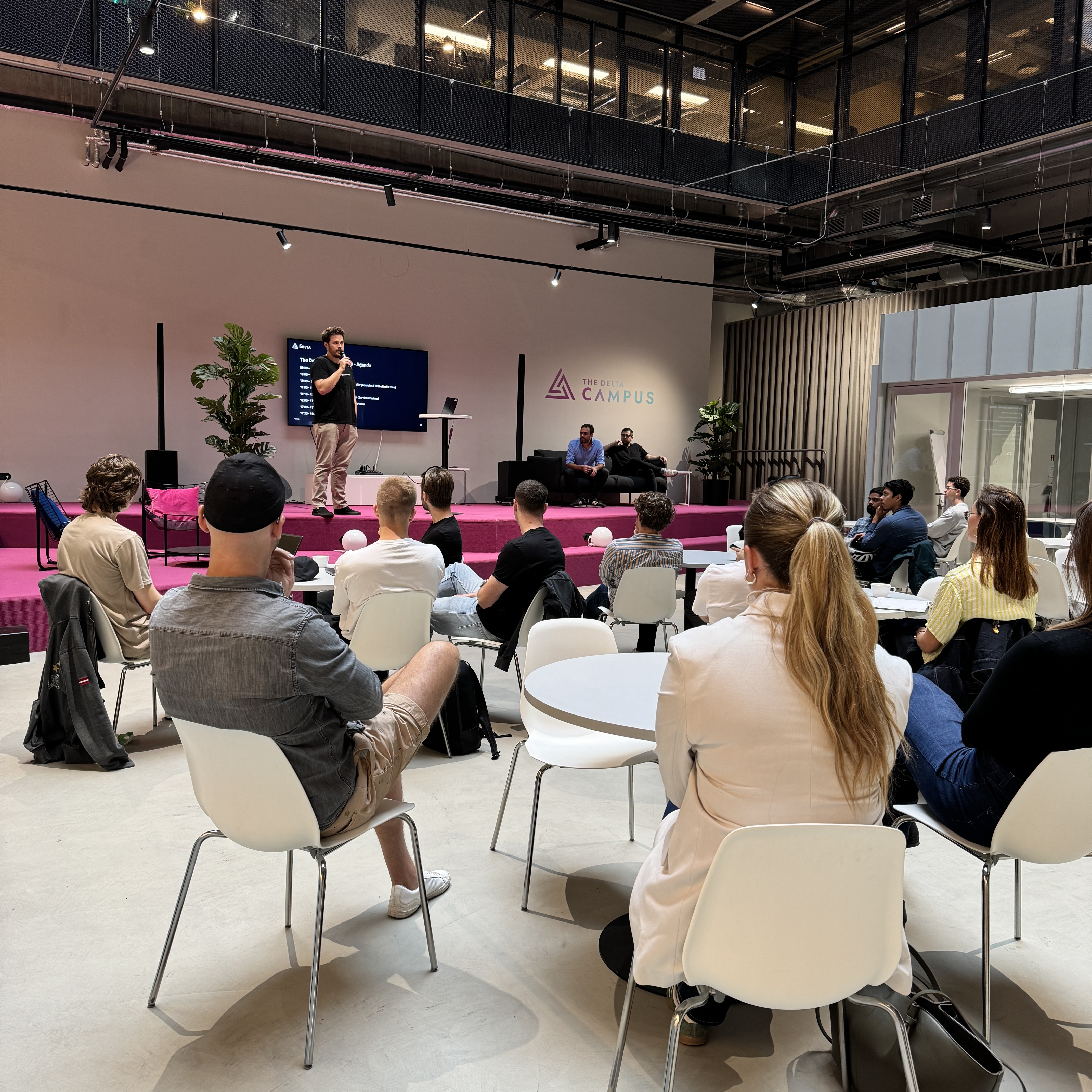
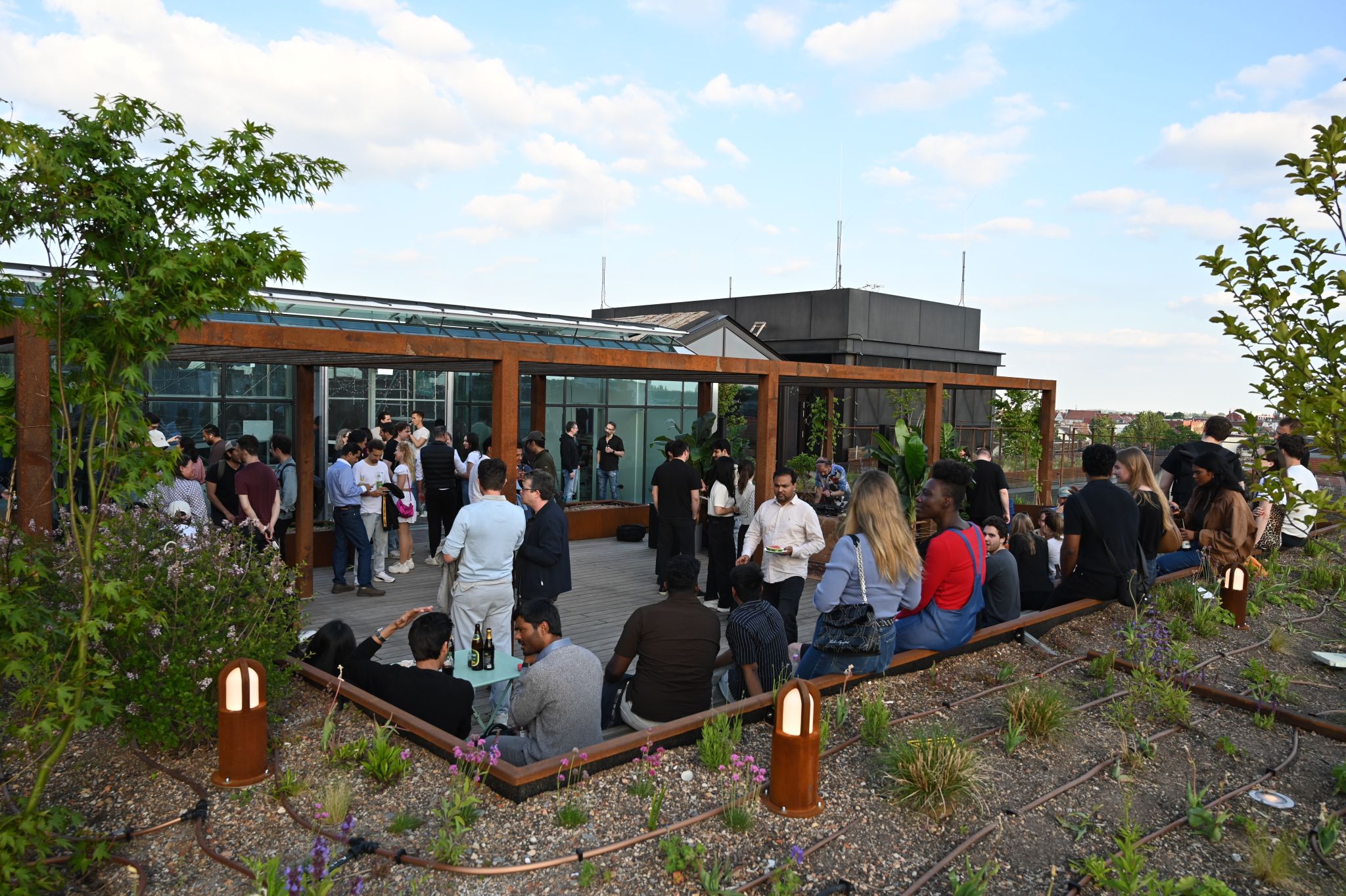
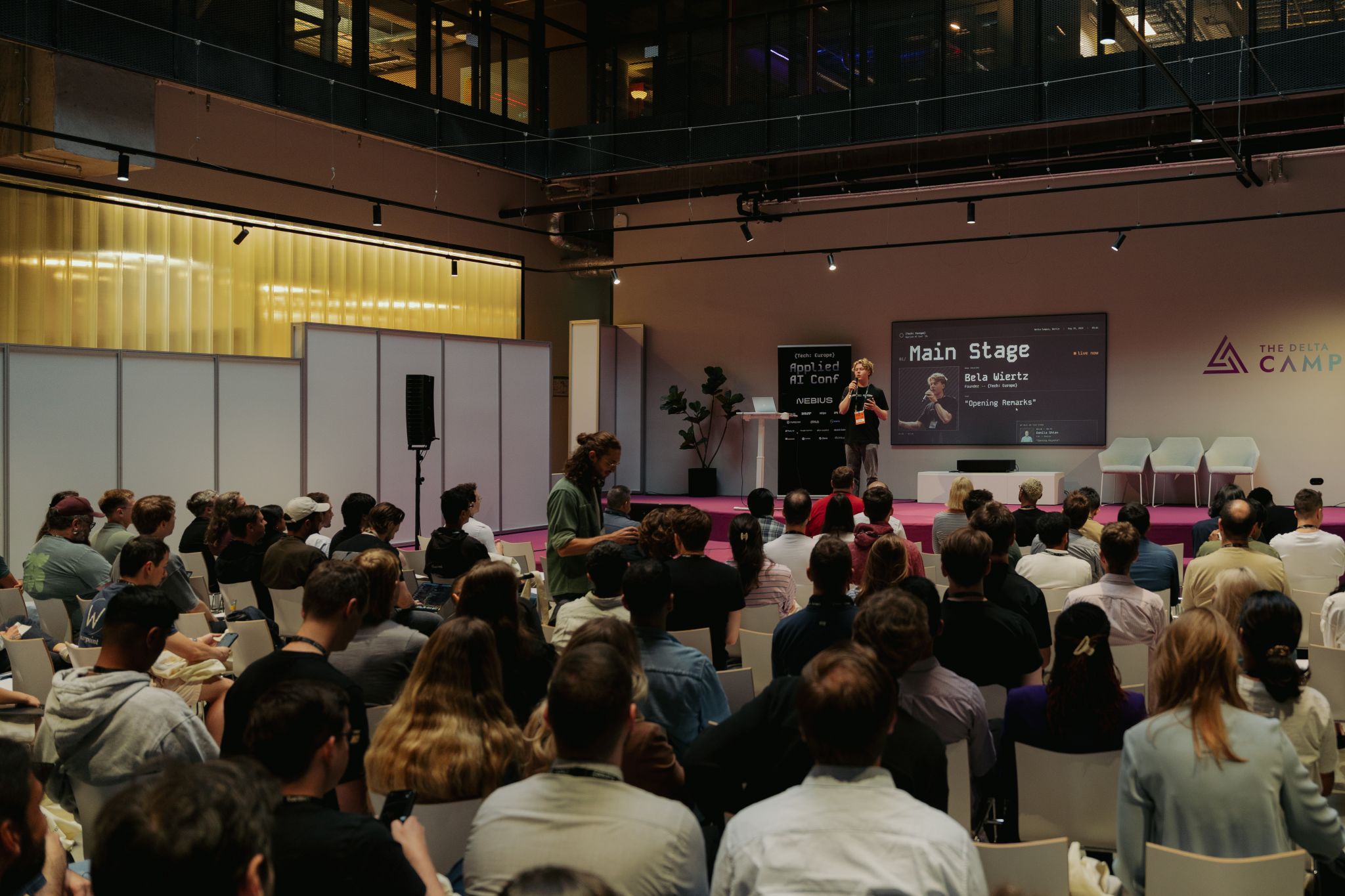
At the 9th edition of Gründerszene × The Delta, Nikita Fahrenholz did not just talk about Lieferheld's role in building Delivery Hero. He talked about everything he built after it, and why he has no intention of stopping.
As co-founder and CEO of Book A Tiger, the cleaning marketplace acquired by Helpling in 2019, and now founder of the luxury garage business Fahrengold and the fitness app Actio, Nikita has spent the fifteen years since his first exit doing something harder than founding one company: doing it again, and again, in categories that have almost nothing in common with each other. This is a story about what comes after the exit, and why he thinks the safest bet for a founder today might be the least fashionable one.
The projects nobody's announced yet
Nikita doesn't frame his post-Delivery Hero career as a single second act. It's a portfolio, and it keeps growing. Beyond Book A Tiger, Fahrengold, and Actio, he casually revealed on stage that he's quietly co-founding two more ventures he hasn't yet made public: an AI and LLM-based product, and something in fintech. "Just starting is key," he said. "Go out and build something that makes sense to you."
It's a pattern that only makes sense if you accept his underlying belief: that building is the point, not any single company. "I run a business, but I just happen to co-found two businesses on the side which I didn't yet publicly announce," he said, almost in passing, before moving on to the next question.
The structural problem with software
The clearest articulation of his current thesis came when he was asked why he'd chosen to build something as unfashionable as garages, in an industry obsessed with infinite scalability. His answer doubled as a warning to the founders in the room. "I'll give you a very big secret here: if you're only building software, your competition isn't human anymore. Think about that."
His reasoning is that AI is compressing the cost of building and copying software toward zero, faster than most founders currently price in. "Software is already close to a commodity. That's part of why you're seeing so much investment in things like quantum systems, or in industries like defense. Beyond the demand itself, hardware is protective by nature."
Building in steel: Fahrengold's answer
Fahrengold is his structural response. The company builds seven-ton, steel-framed garage structures for owners of high-end cars, and Nikita is explicit that the material choice is a deliberate moat. "They might have AI inside, but the shell isn't something an AI can rebuild. In a way, I'm very protected with this product."
The company's growth has been almost entirely accidental. "It was never built as a company," he said. "I built it on the side because I wanted the product to exist." He'd privately capped his own ambition at roughly two garages a year. Then ten orders came in at around €100,000 each. Four years later, Fahrengold does millions of euros in annual revenue without spending a euro on marketing, building bespoke structures for Koenigsegg, Bugatti, and Ferrari owners. "Every third Bugatti rolling out of the factory now leaves with one of our carports, which cost almost €40,000. That's quite an achievement for an eight-person engineering team from East Berlin." The factory sits in Marzahn, the East Berlin district where Nikita grew up, a deliberate choice, he says, given how far a euro of square footage stretches there compared to central Berlin.
Selling peace of mind, not horsepower
The Fahrengold pitch is built almost entirely on emotion rather than specification. "If you're buying a car like this, you're not buying it because it's fast. You're buying it because you love how it looks, and how it makes you feel. We build architecture for these cars that emphasizes that emotion." He's candid that this makes the product nearly impossible to sell online, which is why the business has grown on word of mouth instead: he described customers who bought one garage, then asked on the spot to invest half a million euros because the emotional pull was that strong.
Two things anchor the brand, in his own words: style, and what the company's own tagline translates to roughly as pride and peace of mind, the reassurance that a car collection, wherever it's stored in the world, is genuinely safe. "I have customers with 50 or more cars in their basement, or distributed around the city in some fairly out-of-the-way places. Sometimes they don't even know if their car is still there." He also frames Fahrengold as part of a bigger argument for reviving German manufacturing craft, pointing to the country's deep supplier base for precision hardware as an underused advantage: "Compared to China and the US, our software capability is genuinely not that strong. But we're really good at engineering. That's our DNA as a country."
Why he can't stop building
Underneath the portfolio of companies is a personal operating philosophy Nikita was unusually candid about. Asked how much of founder success is education versus something closer to innate wiring, his answer was blunt: "You need to be intelligent, and you need some baseline education. Otherwise you can't run a company. But 95% of it is grit. It's being the person who's obsessively, almost psychopathically overly committed to this thing."
That same intensity, he admits, requires active management rather than just being pushed through. He's built ultra-distance running into his routine for exactly that reason, not as fitness, but as a release valve. "It helps to get the chatter in your head back into one brick again." And even with multiple exits behind him, he was clear that the psychological weight of building hasn't lightened. "Psychologically, it's not much easier for me than it is for anyone starting out. Don't believe otherwise, that's a false reality." It's also, he says, why he's deliberately staying independent on his newer ventures for as long as he can. "Do I want VC money very early? I don't, to be honest. For me, it's better to stay self-funded first," which is what lets him keep building whatever makes sense to him, on his own timeline, rather than someone else's.
Founder Learnings
- A single exit doesn't have to define your career; it can just be the first data point in a longer pattern. Nikita treats founding as a repeatable practice across food delivery, home services, luxury goods, and wellness, not a one-time bet.
- Pure software is losing its moat faster than most founders admit. Betting on AI-resistant, physical products is one deliberate way to buy back defensibility software alone can no longer guarantee.
- The best businesses sometimes start as side projects with no ambition attached. Fahrengold wasn't built to be a company; it became one after unplanned demand proved the market nobody had asked about.
- Self-funding early gives you a timeline nobody else controls. Nikita's reluctance to raise VC money on his newer ventures is a deliberate trade of speed for independence.
- Success doesn't remove the psychological weight of building, it just changes what you're carrying. Even after multiple exits, Nikita says grit and deliberate recovery routines matter as much now as they did at 24.
If you want to build something that lasts and do it alongside people who are thinking the same way, The Delta Campus is where that starts, so book your tour now or contact us.
Written by Alexandra Matthews
Chief Operating Officer